
Why Cooking at Certain Times Feels Gentler Than Others
For a long time, I believed that cooking felt either easy or hard depending on my mood or my energy, and I didn’t question that assumption very much because it seemed obvious enough. Some evenings the kitchen welcomed me, and other times it felt strangely loud and demanding, even when I was making the same…
For a long time, I believed that cooking felt either easy or hard depending on my mood or my energy, and I didn’t question that assumption very much because it seemed obvious enough.
Some evenings the kitchen welcomed me, and other times it felt strangely loud and demanding, even when I was making the same simple meal with the same familiar tools.
I thought the difference lived inside me, as if I were inconsistent or sensitive, until I started noticing how often the same pattern repeated itself regardless of what kind of day I had.
Over time, I began to realize that the kitchen itself was changing, not in layout or temperature, but in tone, shaped by the hour, the quality of light, and the background sounds that filled the space.
Cooking wasn’t inherently gentle or harsh, but responded to timing in ways I hadn’t been paying attention to, and once I noticed that, the experience of feeding myself shifted quietly but completely.
The First Time I Noticed the Pattern
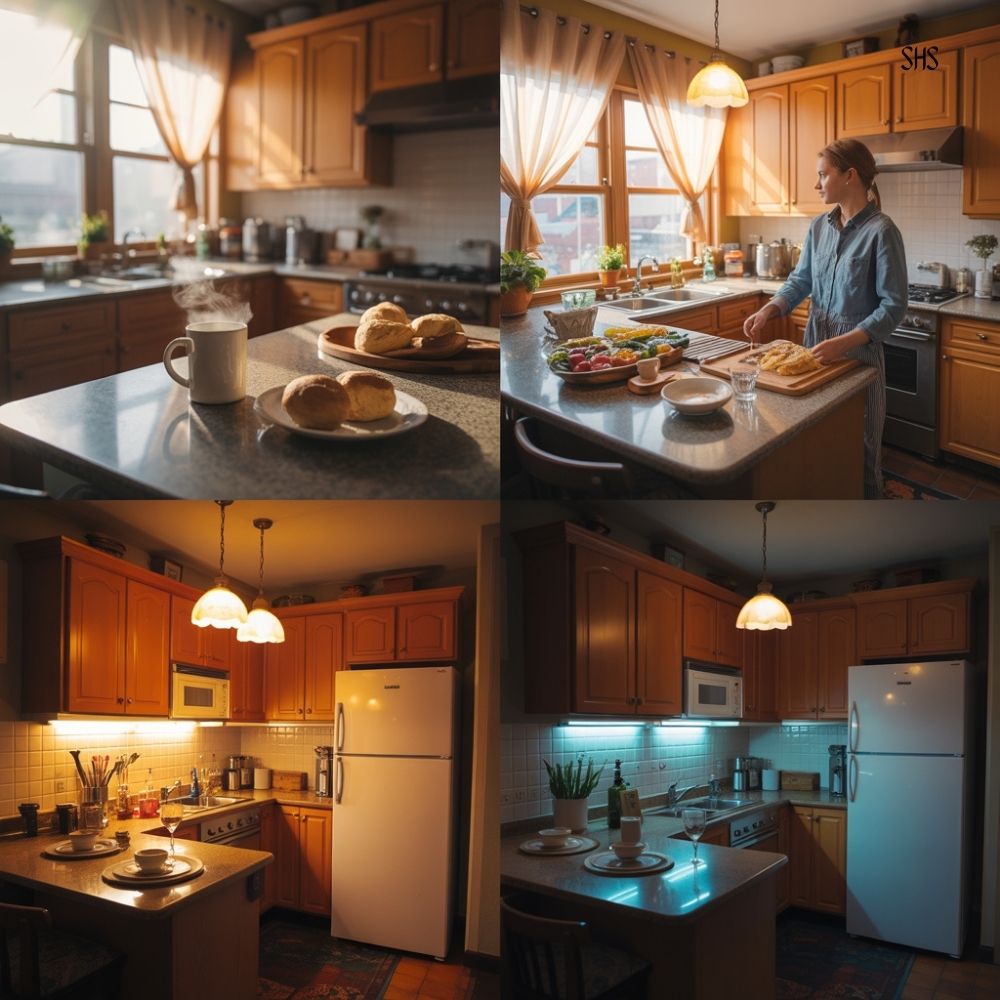
The pattern revealed itself on a late afternoon when I stepped into the kitchen earlier than usual, not because I planned to cook, but because I was hungry sooner than expected. The light coming through the window was softer, angled lower, and less insistent than it usually was in the evening, and the house was quiet in a way it rarely is later on.
As I moved through the steps of cooking, I noticed how relaxed my body felt, how my shoulders stayed down, how my breath remained steady, and how even small sounds, like the tap of a spoon against a bowl, didn’t feel intrusive.
The meal wasn’t special, and nothing about the day had been particularly calm, yet the cooking itself felt easy in a way that surprised me. That moment lingered with me, because it didn’t match my usual narrative about energy or motivation.
How Circadian Rhythm Shows Up Without Announcing It
Circadian rhythm is often discussed in abstract terms, but I experience it in small, physical cues that show up whether I name them or not.
My body has preferences for when it wants to move, when it wants to focus, and when it wants to slow down, and cooking sits right at the intersection of all three.
Earlier in the day, especially in the late morning or mid-afternoon, my coordination feels smoother, my tolerance for sensory input is higher, and my patience with small tasks is steadier.
In the evening, especially after sunset, my nervous system begins shifting toward rest, even if my mind hasn’t caught up yet, and cooking during that transition can feel like swimming upstream.
Once I recognized that, I stopped framing discomfort as a personal failing and started seeing it as a mismatch between timing and task.
Why Light Changes Everything
Light is one of the quietest influences on how cooking feels, and yet it shapes the entire experience without asking for attention.
In bright midday light, surfaces feel sharper, edges more defined, and movements more precise, which supports tasks like chopping, measuring, and cleaning in a way that feels natural.
As the day moves toward evening, the light softens and dims, creating a mood that feels comforting but less conducive to precision.
When I try to cook complex meals under artificial lighting at night, I notice my eyes working harder, my movements slowing down, and my tolerance thinning, even if I don’t consciously register why.
The gentlest cooking moments for me tend to happen when natural light is still present but no longer harsh, creating a balance between clarity and calm that supports both focus and ease.
The Role of Sound in Kitchen Comfort
Sound plays a bigger role than I expected, especially because kitchens tend to amplify noise through hard surfaces and enclosed spaces. Earlier in the day, background sounds feel more diffuse, traffic hums quietly, and the house itself hasn’t yet filled with overlapping layers of activity.
In the evening, sounds stack more densely, appliances hum louder, dishes clatter more sharply, and even familiar noises can feel intrusive when my nervous system is already winding down.
Cooking during those hours can feel overstimulating, not because anything is objectively loud, but because my capacity to filter sound has shifted.
Noticing this helped me understand why some evenings I crave silence before I can even think about food.
Why Some Meals Belong to Certain Hours
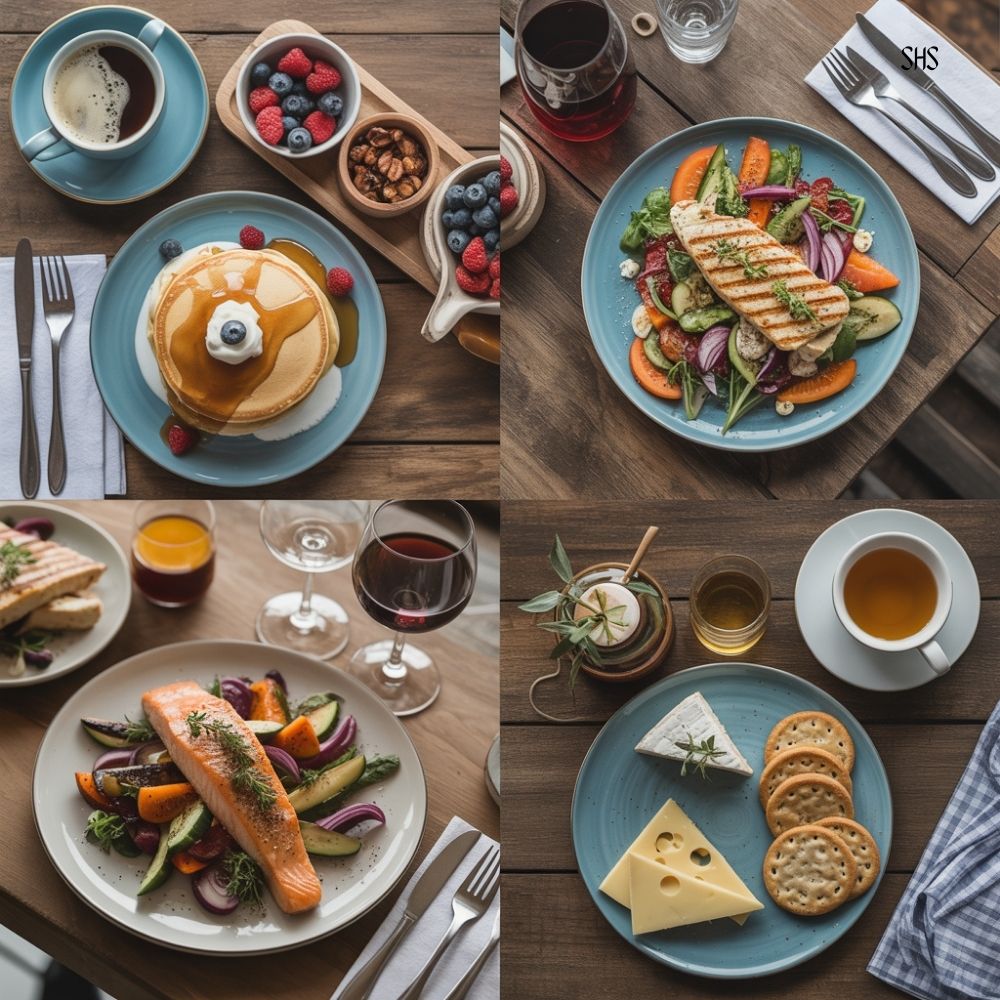
Over time, I started noticing that certain meals naturally belonged to certain times of day, not because of tradition or rules, but because of how they interacted with my energy.
Simple, repetitive tasks like stirring, simmering, or assembling bowls felt supportive in the evening, while more involved preparations felt better earlier, when my body was more alert and my senses more open.
Instead of forcing myself to cook everything at the same hour, I began letting the timing shape the menu, which reduced resistance without requiring discipline. Cooking became less about fitting food into my schedule and more about matching it to the moment.
The Emotional Weight of Evening Cooking
Evening cooking carries emotional weight that earlier cooking doesn’t. There’s a sense that dinner should conclude the day properly, that it should be nourishing, comforting, and complete, which adds pressure even before the first ingredient is touched.
Cooking earlier removes some of that emotional load, allowing the act itself to exist without carrying the responsibility of closure. When dinner is already prepared or partially done before the evening arrives, the night unfolds more gently, with less urgency and fewer decisions.
That realization changed how I think about preparation, not as productivity, but as kindness toward my future self.
How I Redesigned My Cooking Windows
Once I understood how timing affected my experience, I stopped trying to cook everything at the same hour and started experimenting with softer windows instead. I prep ingredients earlier, cook certain components when light and energy feel supportive, and save only the simplest steps for later.
This redesign didn’t require strict planning or schedules, but a willingness to notice when something felt easy and repeat that condition when possible. Cooking became less reactive and more responsive, adapting to my rhythms instead of fighting them.
What This Taught Me About Listening to Subtle Signals
Cooking at different times taught me how much information my body offers quietly, through tension, ease, impatience, or calm, and how often I had been ignoring those signals in favor of habit.
Paying attention to when cooking felt gentle helped me trust those signals instead of overriding them.
That trust extended beyond the kitchen, making me more aware of how timing affects other parts of my day too.
Why I Trust This Awareness Now
I trust this awareness because it has repeated itself across seasons, moods, and circumstances, proving that timing matters even when nothing else changes.
Cooking isn’t just about ingredients or skill, but about context, and when that context is supportive, everything feels easier.
This understanding feels less like a rule and more like a quiet permission to work with myself rather than against myself.
Today’s Charm
Notice when cooking feels easiest for you, and let that time become a place of support rather than coincidence.
What might soften if you matched meals to moments instead of forcing them into the same hour every day?