The Way I Keep Bread Fresh Without Special Containers
I used to think stale bread was just one of those small, inevitable disappointments you accept as part of daily life, the kind that feels too minor to fix but annoying enough to chip away at your mood when it happens over and over again. I would buy a loaf with good intentions, enjoy the…
I used to think stale bread was just one of those small, inevitable disappointments you accept as part of daily life, the kind that feels too minor to fix but annoying enough to chip away at your mood when it happens over and over again.
I would buy a loaf with good intentions, enjoy the first few slices while it was still soft and fragrant, and then quietly resign myself to the fact that the rest would either dry out too quickly or turn oddly damp before I had a chance to finish it.
What frustrated me wasn’t just the wasted bread, but the feeling that I was doing something wrong without knowing what it was, as if there was a secret rule everyone else understood that I had somehow missed.
I didn’t want another bulky container taking up space on the counter, and I didn’t want to turn bread storage into a system that required purchasing something new, so I started paying attention instead, noticing where I kept my bread, how it was wrapped, and what the air around it was doing.
The Problem With How I Was Storing Bread Before
For years, I kept bread sealed tightly in plastic and pushed into whatever spot happened to be free, usually near the stove or tucked into a corner of the counter where it felt out of the way.
It seemed logical at the time, because sealing it felt protective, and hiding it felt tidy; however, I noticed that the bread never lasted as long as I had hoped.
Sometimes it dried out quickly, becoming brittle and joyless, and other times it developed that strange, slightly damp texture that feels wrong before you can even explain why. I realized eventually that I was either suffocating the bread or exposing it to too much heat and humidity.
Bread, it turns out, wants something very specific, and once I gave it that, it stopped punishing me for guessing wrong.
The First Small Change I Made Without Thinking
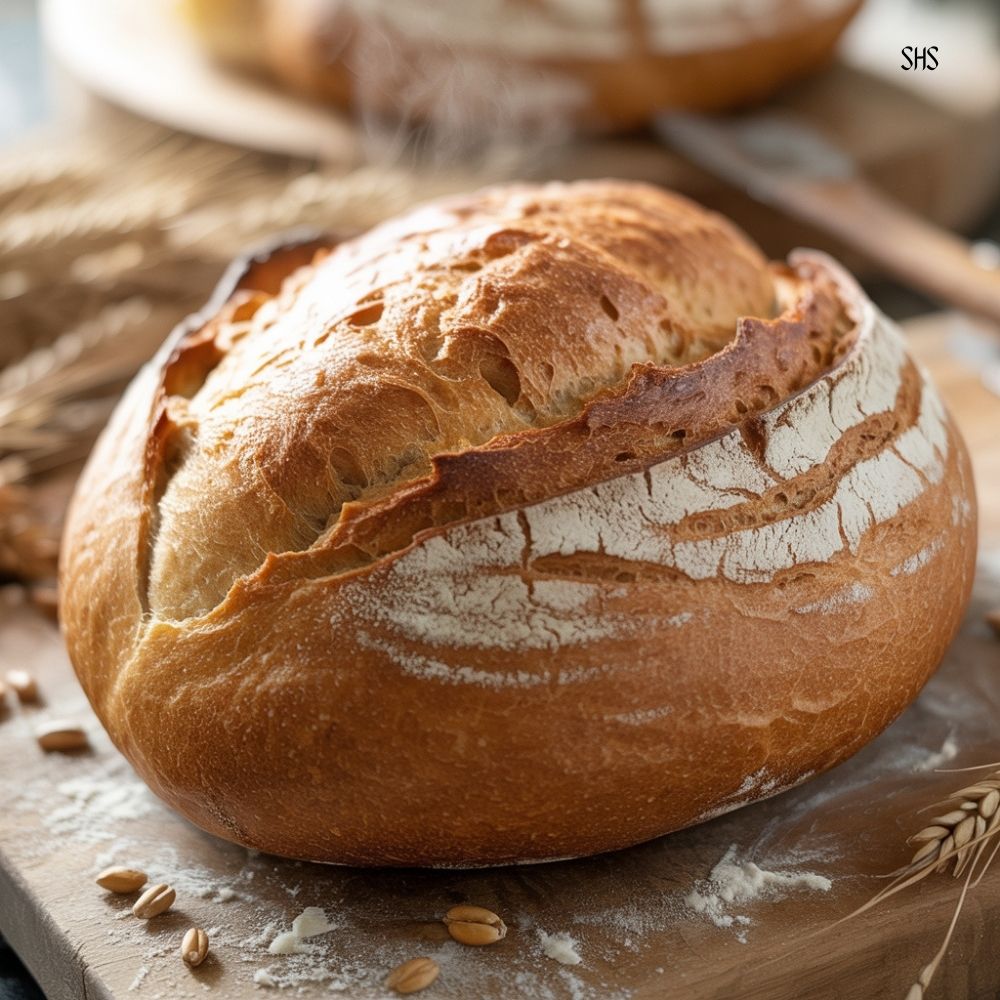
The first thing I changed wasn’t the bread itself, but what I wrapped it in, because one afternoon I ran out of plastic bags and reached instead for a clean cotton kitchen towel without expecting it to matter much.
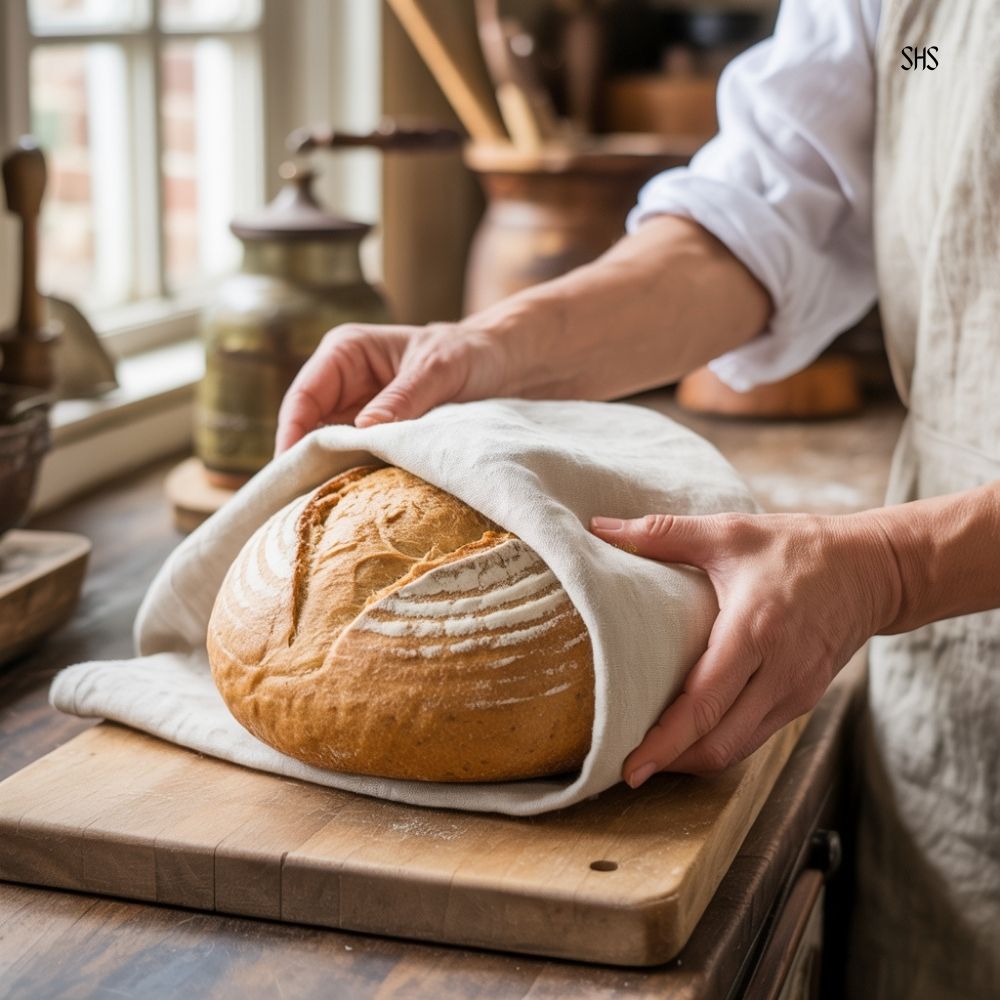
I wrapped the loaf loosely, not tightly or neatly, and left it on the counter where it felt easiest to reach.
When I came back to it the next day, the bread was still soft, not damp, not dry, and that surprised me enough to keep experimenting.
That single swap taught me that bread needs to breathe just enough, and cloth gives it that balance in a way plastic never could.
Why Cloth Works Better Than Plastic
Plastic traps moisture, which might sound helpful at first, but in reality it creates a sealed environment where condensation builds and texture suffers.
Cloth, on the other hand, absorbs excess moisture while still allowing airflow, creating a middle ground where the bread can stay soft without feeling suffocated.
I noticed that when I wrapped bread in a clean cotton or linen towel, the crust stayed intact, rather than becoming rubbery, and the inside remained tender without turning spongy. The cloth acted less like a barrier and more like a buffer, regulating the environment rather than controlling it.
Where I Keep the Bread Now
Once I understood the importance of airflow, placement became the next quiet lesson. I stopped storing bread near heat sources, like the stove or the toaster, and moved it instead to a cooler, shaded part of the kitchen where the temperature stays more consistent throughout the day.
I keep it on the counter rather than tucked away, not because it looks pretty, but because counters tend to have better airflow than cabinets, especially ones near appliances. The bread sits away from direct sunlight and away from moisture, resting in a place that feels calm rather than crowded.
That change alone extended the life of my bread noticeably, without any extra effort on my part.
The Role of Airflow in Keeping Bread Happy
Airflow turned out to be the missing piece I hadn’t been considering at all, because I was so focused on protection that I forgot about balance.
Bread doesn’t want to be exposed, but it also doesn’t want to be trapped. Allowing gentle circulation around the loaf prevents both excessive drying and unwanted dampness.
I don’t cover the bread completely airtight, and I don’t leave it fully uncovered either, because the sweet spot lives somewhere in between. A loosely wrapped loaf placed in open air stays fresh far longer than one sealed away in a closed container.
That realization changed how I think about storing other foods too, but bread taught it to me first.
What I Do When the Bread Starts to Change
Even with good storage, bread evolves over time, and instead of fighting that, I work with it. When the loaf begins to firm up, I shift its purpose rather than forcing it to stay something it no longer is, turning it into toast, grilled sandwiches, or something warm that brings the softness back.
Because the bread has been stored kindly, it transitions more gracefully, becoming pleasantly crisp rather than unpleasantly hard, and that makes all the difference in how it feels to use.
I learned early on that refrigeration speeds up the staling process, even though it feels counterintuitive, and once I stopped putting bread in the fridge, its texture improved dramatically. Cold temperatures cause starches in bread to crystallize faster, which leads to that dry, crumbly interior that never quite recovers.
Keeping bread at room temperature, wrapped in cloth and placed thoughtfully, turned out to be far kinder than chilling it ever was.
What This Hack Taught Me Beyond Bread
This small change taught me that many everyday frustrations come from environments that aren’t quite right, rather than personal failure or lack of effort. I wasn’t bad at managing bread, and the bread wasn’t low quality, but the conditions simply weren’t supportive.
Once I adjusted the environment instead of blaming myself or the loaf, the problem solved itself quietly and consistently.
That lesson has stayed with me.
Today’s Charm
Wrap your bread in a clean cloth, place it somewhere cool and open, and let airflow do the quiet work it was always meant to do.
What’s one everyday item that might need a gentler environment instead of more control?