The One Munchie Drawer I Have to Calm Myself During Period Days
For a long time, period days felt like they arrived with their own weather system, one that shifted my energy, my appetite, my tolerance, and my sense of proportion in ways I could never quite predict or fully prepare for. I knew the patterns in theory, the slower mornings, the heavier body, the sharper emotions,…
For a long time, period days felt like they arrived with their own weather system, one that shifted my energy, my appetite, my tolerance, and my sense of proportion in ways I could never quite predict or fully prepare for.
I knew the patterns in theory, the slower mornings, the heavier body, the sharper emotions, yet every month I still found myself slightly surprised by how much comfort mattered, not just emotionally, but physically, in very specific, ordinary ways.
What I didn’t expect was that the thing that helped me most wasn’t a new routine or a better attitude, but a single drawer in my kitchen that I set up with intention, permission, and just enough order to make it feel safe rather than restrictive.
That drawer didn’t fix anything in a dramatic sense, but it changed how those days unfolded. It gave me a place where my needs were already anticipated instead of negotiated in the moment.
The Problem I Was Trying to Solve Without Naming
Before the drawer existed, period days came with a quiet internal debate around food that drained me more than the cravings themselves ever did.
I would want something comforting, then question that want, then try to redirect myself toward something more reasonable, only to circle back to the same craving with more frustration layered on top.
The food itself wasn’t the issue, but the lack of permission, the feeling that I needed to justify comfort or earn it or manage it responsibly even when my body was clearly asking for something specific.
That constant decision-making created tension that made everything feel louder, and by the time I finally ate something, I was already exhausted by the process.
I didn’t realize how much energy I was spending on that internal negotiation until I stopped doing it.
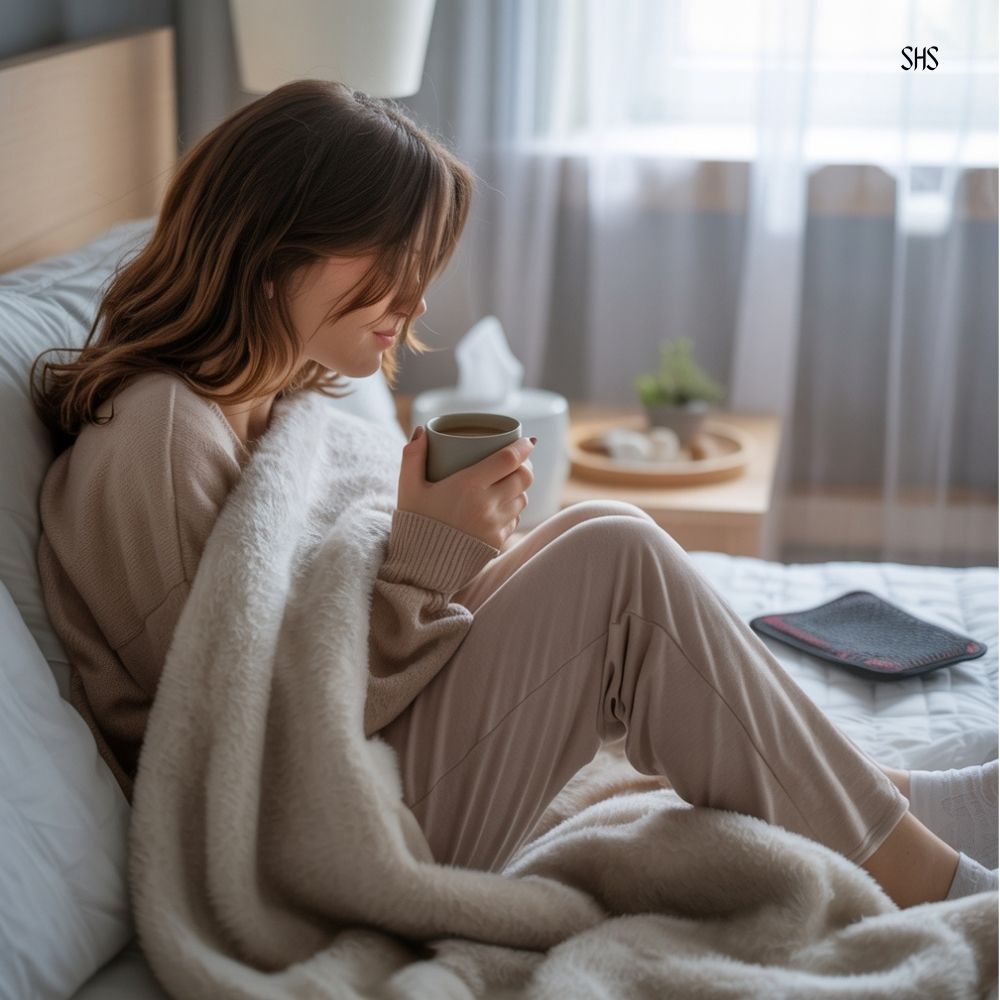
Why I Chose a Drawer Instead of a Rule
The idea of creating a munchie drawer didn’t come from wanting to be organized or indulgent, but from wanting to remove friction at a time when my capacity was already lower.
A drawer felt contained without being limiting, a physical boundary that said this is allowed here, without spilling into the rest of my day or my thoughts.
I chose a drawer rather than a cabinet or a basket because drawers feel private and intentional, something you open deliberately rather than stumble upon. That subtle sense of containment mattered, because it made the comfort feel chosen rather than impulsive.
What Lives in the Drawer and Why
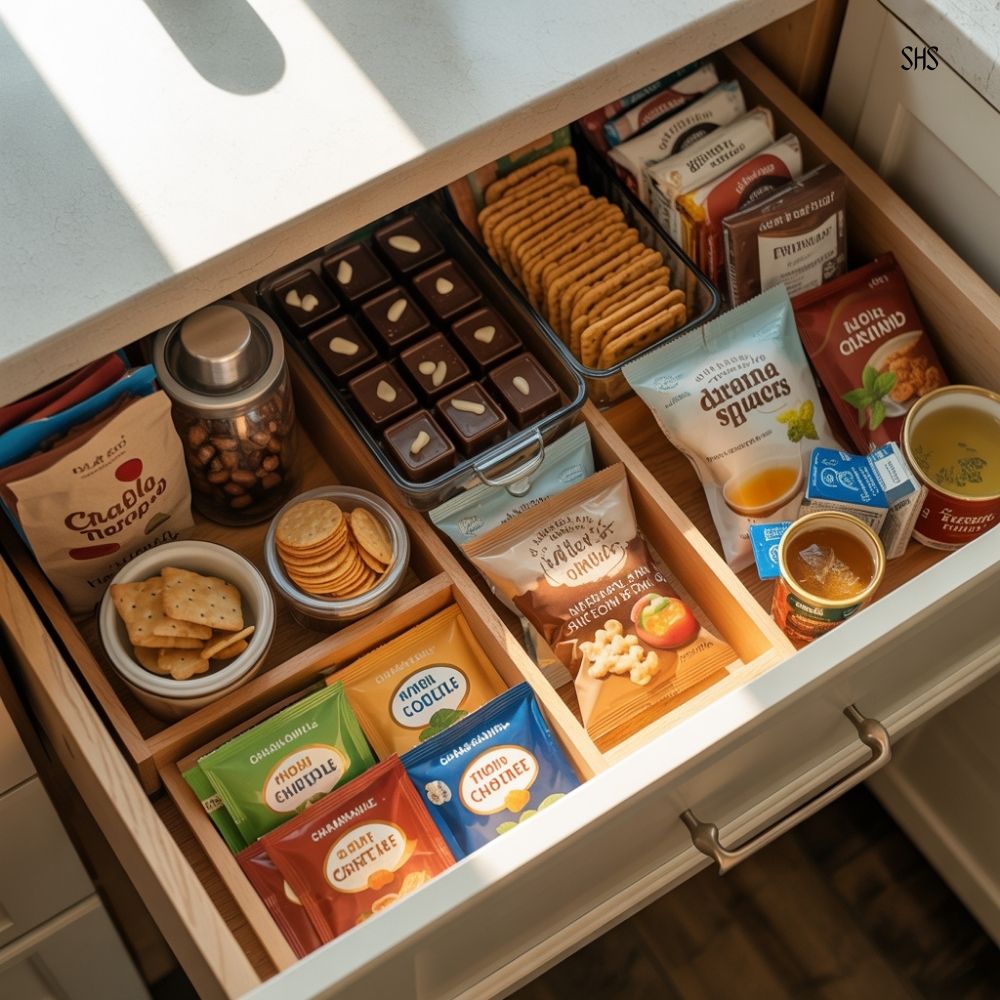
What I keep in the drawer has changed over time, but the logic behind it has stayed the same, which is that everything in there is something I want during period days without needing to negotiate or explain it to myself.
I include a mix of salty and sweet, crunchy and soft, familiar and soothing, because my cravings don’t follow a single theme and I don’t expect them to.
There are things like chocolate that melts slowly, crackers that crunch gently, small bags of chips that feel satisfying without being overwhelming, and a few shelf-stable treats that remind me of being taken care of.
I also keep herbal tea packets and simple broths nearby, because sometimes comfort looks like warmth rather than chewing.
Nothing in the drawer is there to be “balanced” by something else, and that absence of moral framing is what makes it work.
The Selective Order That Makes It Calming
The drawer isn’t chaotic, but it isn’t rigid either, and that selective order is what keeps it from becoming stressful. I group things loosely, sweets toward one side, salty things toward the other, softer items in the back, crunchier ones in front, creating visual clarity without labels or rules.
This small amount of order matters because it lets my eyes scan quickly without effort, which reduces the feeling of overwhelm that can show up easily during period days. I don’t want to search or decide or evaluate, but to recognize and choose with minimal friction.
The drawer feels calm because it’s organized for tired eyes, not ideal behavior.
The Relief of Not Having to Decide
One of the biggest shifts this drawer created was the relief of not having to decide in the moment whether I was allowed to want what I wanted.
Opening the drawer removed the internal conversation entirely, because the permission had already been granted earlier, on a day when I felt clear and capable.
That advance permission changed how the food landed in my body, because I ate it without guilt or urgency, which made it more satisfying and less emotionally charged. The same snack tasted different when it didn’t come with self-critique.
How Control Shows Up in Unexpected Ways
I used to think control meant restraint or discipline, but this drawer taught me that control can also mean designing your environment so you don’t have to exercise willpower when you’re least equipped to do so.
By choosing what went into the drawer ahead of time, I controlled the range of options without denying myself comfort.
That kind of control felt supportive rather than restrictive, because it worked with my needs instead of against them. I wasn’t trying to override cravings, but to meet them in a way that didn’t create chaos or regret.
It was a form of care I hadn’t known how to name before.
Why This Drawer Only Exists for Certain Days
I don’t treat this drawer as an everyday snack station, and that specificity is part of what makes it effective. Knowing that it’s there for certain days gives it a sense of purpose, a quiet agreement between me and myself that comfort is prioritized when my body is doing extra work.
This isn’t about restriction or scarcity, but about context, recognizing that needs shift throughout the month and that responding to those shifts intentionally makes life easier rather than harder.
The drawer holds space for that rhythm without demanding attention outside of it.
How This Changed the Rest of the Day
The impact of the drawer extended beyond food, because it changed how I treated myself in other ways during period days.
When I allowed comfort in one area without negotiation, I became more willing to allow it elsewhere too, resting when I needed to, slowing down without guilt, and adjusting expectations quietly rather than pushing through.
The drawer became a signal rather than a solution, reminding me that this phase deserved a different pace.
Why I Trust This System
I trust this system because it has repeated itself across many cycles, quietly doing its job without escalation or drama. The drawer doesn’t fix discomfort or eliminate emotional shifts, but it reduces friction in a way that feels meaningful and kind.
It’s a small thing that holds a lot.
If I could tell my past self anything, it would be that comfort doesn’t need to be justified when your body is already doing hard work, and that creating small systems of care is not weakness or indulgence, but wisdom learned through listening.
The drawer would have saved me a lot of energy sooner.
Today’s Charm
Choose one small space to hold comfort for you ahead of time, so you don’t have to negotiate for it later.
What might feel easier if permission were already built in?