How I Pack My Bag So Nothing Disappears
For a long time, I thought losing things inside my bag was just part of moving through the world, a small tax you pay for leaving the house with your life tucked into one soft container that refuses to keep secrets. Every day, I would dig for my keys, rescue my lip balm from the…
For a long time, I thought losing things inside my bag was just part of moving through the world, a small tax you pay for leaving the house with your life tucked into one soft container that refuses to keep secrets.
Every day, I would dig for my keys, rescue my lip balm from the bottom, or realize my phone charger had vanished somewhere between errands. Each time I felt a tiny flicker of stress that didn’t seem important enough to fix, yet kept happening anyway.
What bothered me wasn’t the searching itself, but the feeling that my bag was working against me, turning simple moments into interruptions and making me feel slightly scattered before I even arrived anywhere.
I didn’t want a new bag, and I didn’t want compartments that forced everything into rigid order, because that kind of structure never survives real life for me. I started paying attention instead, noticing where things naturally landed and why they kept disappearing.
That curiosity led me to something surprisingly simple: treating my tote less like a bucket and more like a small room with distinct zones.
The Moment I Realized My Bag Needed Geography
The realization came one afternoon when I emptied my bag completely onto the table, not to organize it properly, but because I couldn’t find one specific thing and had reached the end of my patience.
As everything spilled out, I noticed a pattern I hadn’t seen before, which was that certain items always ended up together, while others drifted freely and caused the most trouble.
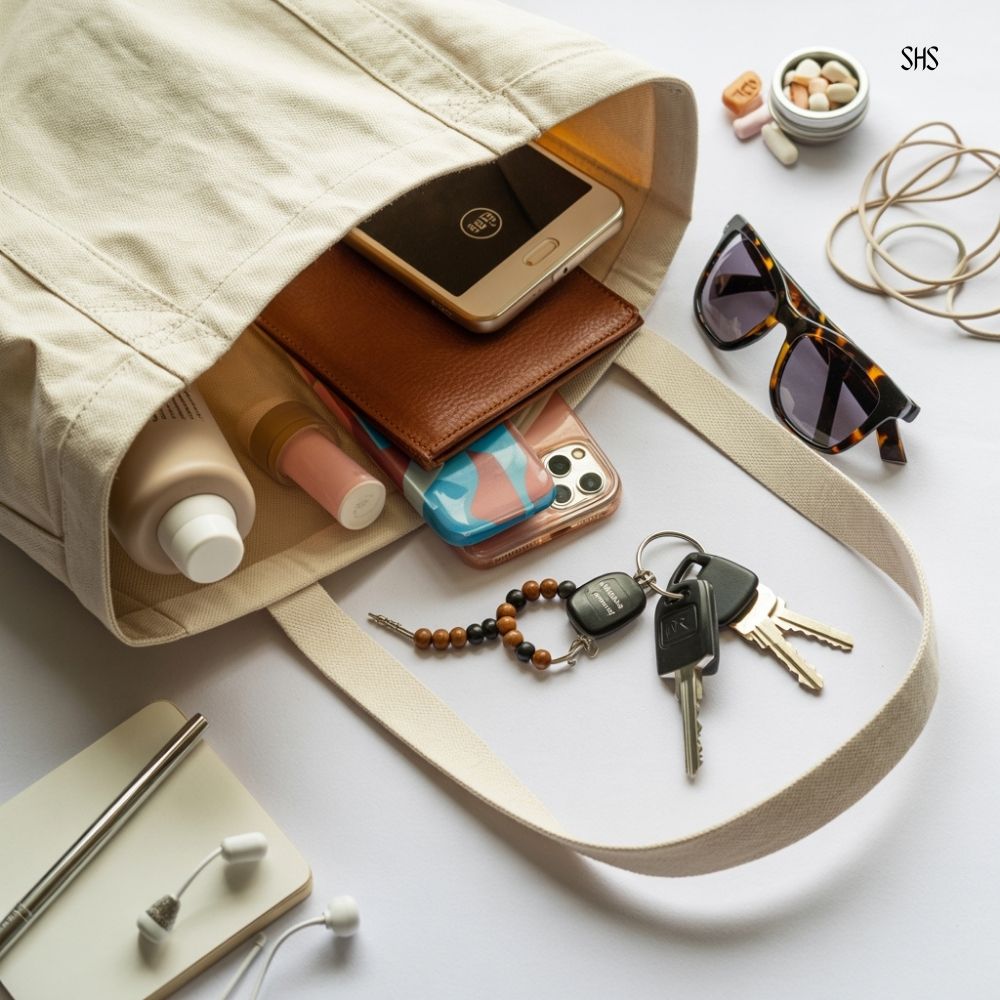
My phone, keys, and wallet tended to cluster near the opening, while softer items like a scarf or notebook sank toward the bottom, and small essentials like lip balm, hand cream, and earbuds floated unpredictably between layers.
The bag itself wasn’t chaotic, but undefined. Without boundaries, everything behaved like it was lost even when it wasn’t. That was when I stopped thinking about organization and started thinking about zones.
What I Mean by Zones (And What I Don’t)
Zones aren’t compartments or pouches with zippers and labels, and they aren’t about making your bag look neat when you open it, because real life doesn’t happen in neat layers. Zones are loose, intuitive areas that exist because you decide what belongs where and then let gravity and habit do the rest.
I don’t divide my bag evenly or symmetrically, and I don’t measure anything, but I do assign roles to different parts of the space, and once those roles are clear, my hands stop searching blindly and start reaching with confidence.
That shift alone changed how it feels to leave the house.
The Three Zones That Changed Everything
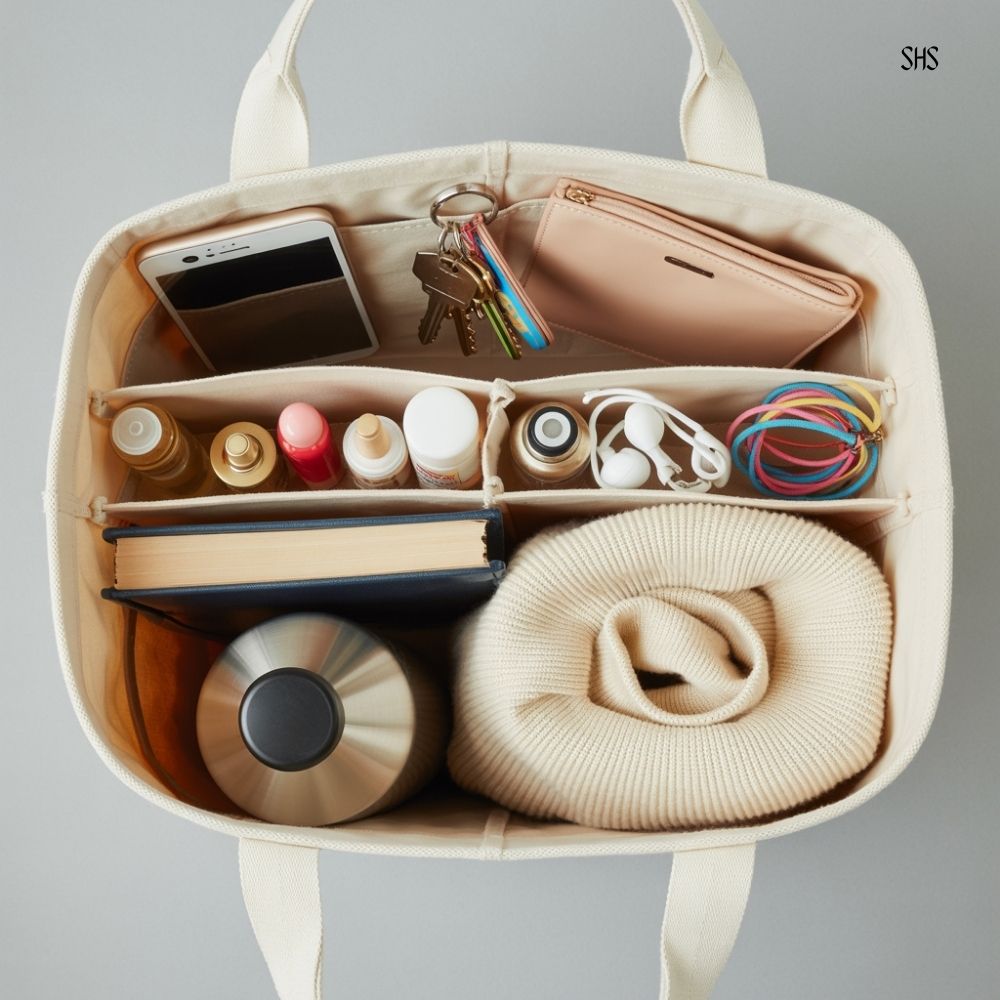
The first zone lives right at the top, close to the opening, and it’s reserved for the things I reach for most often, like my phone, keys, and wallet, which means I never drop them into the depths where they can disappear.
This zone is intentionally shallow, and I don’t let anything bulky live there, because bulk pushes essentials downward and creates chaos immediately.
The second zone sits at the bottom of the bag and holds the heavier, quieter items that don’t need to be accessed quickly, like a book, a water bottle, or a folded sweater. Keeping these items anchored there gives the bag weight and structure that prevents everything else from shifting unpredictably.
The third zone is the most important and the easiest to overlook, because it lives along one side of the bag and holds all the small things that used to vanish constantly, like lip balm, hand cream, earbuds, and hair ties.
This zone exists because I place one soft but structured item there, usually a small fabric pouch or a sunglasses case, which creates a natural wall that small objects collect against instead of drifting.
Nothing is zipped or sealed, but everything has a tendency to land where it belongs.
Why Side Zones Matter More Than You Think
The side of a tote is the most underused space, yet it’s where small items instinctively migrate, especially when the bag is set down or picked up repeatedly.
Before I defined that side zone, small items would scatter across the bottom, hiding under heavier things and creating the illusion that they were lost.
By giving them a boundary, even a soft one, I stopped fighting gravity and started guiding it, and that made my bag feel cooperative instead of unruly.
How I Maintain the Zones Without Trying
The reason this system works is that it doesn’t rely on discipline or resetting, and I don’t empty my bag every day or correct it constantly.
The zones hold because they match how I naturally move, and when something ends up in the wrong place, it doesn’t break the system; it just drifts back the next time I reach in.
If the bag starts feeling off, I know immediately which zone needs attention, and adjusting it takes seconds instead of becoming a whole task.
What I Stopped Carrying Once Zones Existed
Once I stopped losing things, I also stopped overpacking, because I no longer felt the need to bring duplicates or “just in case” items to compensate for disorganization.
I realized I had been carrying extra lip balms, extra chargers, and extra pens simply because I couldn’t reliably find the ones I already had. Zones reduced that anxiety quietly, and my bag became lighter without effort.
Moving through the day feels different when your bag doesn’t demand attention, because every time you can reach for something without searching, your nervous system stays calm instead of spiking.
Waiting in line, standing on a sidewalk, or juggling things with one hand becomes easier when you trust your bag to behave.
That trust adds up, especially on busy or overstimulating days, making the outside world feel less demanding.
What This Taught Me About Everyday Stress
This small adjustment taught me that stress often comes from friction we accept as normal, and that reducing that friction doesn’t require perfection or control, but alignment. Once my bag aligned with how I actually move, the stress disappeared without effort.
It reminded me that organization doesn’t have to look impressive to be effective.
As long as I carry a tote, I’ll use zones, because they adapt to different days, different contents, and different needs without falling apart. They hold structure lightly, allowing life to shift without causing chaos. My bag feels calmer now, and so do I.
Today’s Charm
Before you leave the house tomorrow, decide where things naturally want to live inside your bag and let those areas become gentle zones instead of fighting them.
What small space in your life might feel easier if it had a little more clarity instead of control?