The One Tool I Use in Three Rooms for Completely Different Reasons
For a long time, I believed that being prepared meant owning the right thing for every specific problem, the correct spray for the bathroom, the correct cloth for the kitchen, the correct tool for dust, glass, spills, and surfaces. Cabinets filled up, choices multiplied, and every small task came with a moment of hesitation about…
For a long time, I believed that being prepared meant owning the right thing for every specific problem, the correct spray for the bathroom, the correct cloth for the kitchen, the correct tool for dust, glass, spills, and surfaces.
Cabinets filled up, choices multiplied, and every small task came with a moment of hesitation about what to reach for, which turned simple care into something heavier than it needed to be.
What eventually changed this wasn’t a desire to simplify for the sake of simplicity, but fatigue, the quiet kind that comes from managing too many objects that all promise usefulness while asking for attention in return.
Somewhere along the way, I stopped reaching for specialized tools and started relying on one unassuming thing that worked almost everywhere, a plain microfiber cloth, soft, flexible, and forgiving, that moved easily from room to room without requiring explanation.
I didn’t plan for it to become my most-used tool, but it did, because it met me where I was instead of asking me to remember rules.
Why This Cloth Stayed When Others Didn’t
The microfiber cloth I use isn’t fancy, color-coded, or designated for one purpose, and that’s exactly why it lasted. It’s soft enough not to scratch, absorbent enough to handle spills, and textured enough to lift dust without scattering it, which makes it adaptable in a way rigid tools never are.
Unlike paper towels or disposable wipes, it doesn’t create urgency or waste, and unlike specialized cleaners, it doesn’t come with instructions or warnings that interrupt the flow of a task.
I can pick it up without thinking, use it instinctively, and rinse it when I’m done, which keeps the focus on the care itself rather than the method. That ease turned out to matter more than efficiency ever did.
How It Lives in My Kitchen
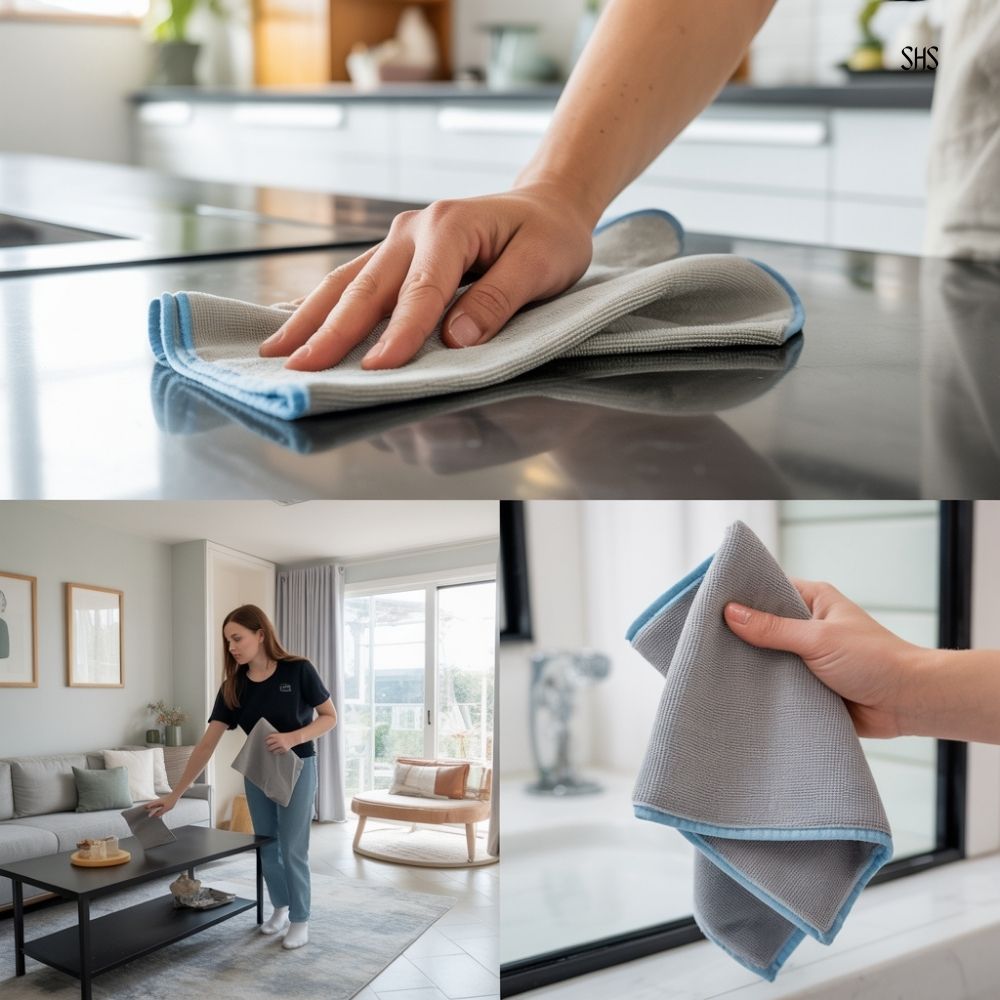
In the kitchen, the cloth becomes my quiet companion, stepping in wherever hands and surfaces meet in ways that feel slightly messy but not alarming.
I use it to wipe counters after cooking, to catch drips before they harden, and to dry vegetables or dishes when I don’t want to reach for a towel that feels too bulky or formal for the moment.
Because it’s soft and forgiving, I don’t worry about scratching surfaces or leaving streaks, and because it absorbs without pushing water around, the kitchen feels calmer almost immediately after I use it.
I also use it damp to wipe the fronts of cabinets, the handle of the fridge, and the places my hands touch most often, not as a deep clean, but as maintenance that keeps the space feeling fresh.
The cloth doesn’t announce itself as a cleaning tool, but behaves more like an extension of my hands, responding to what needs attention without making a scene.
What It Does Differently in the Bathroom
In the bathroom, the same cloth takes on a slightly different role, one that feels more about gentleness than shine. I use it to wipe the sink and mirror, especially after splashes or steam have left their quiet marks, and I’ve learned that microfiber handles moisture in a way that feels kind rather than aggressive.
It lifts water spots without scratching, clears fog from mirrors without leaving lint, and dries surfaces quickly enough that the room doesn’t stay damp longer than it needs to. I also use it to wipe the edges where water tends to pool, preventing that stale, humid feeling from settling in.
Because it’s washable and reusable, I don’t hesitate to use it freely, which keeps the bathroom from becoming a place that requires effort or preparation before care can happen.
How It Supports My Bedroom Without Feeling Like Cleaning
The bedroom is where this cloth surprised me the most, because I didn’t think of dusting or wiping as something that belonged in a space meant for rest. Over time, though, I noticed how much calmer the room felt when surfaces were free of that thin, invisible layer that accumulates quietly, and how little effort it took to maintain that calm with one soft cloth.
I use it dry to dust nightstands, lamps, and shelves, because microfiber lifts dust instead of spreading it, and I use it slightly damp to wipe window sills or baseboards when they start to feel neglected.
The process is slow, almost meditative, and because the cloth is gentle, it doesn’t turn into a task that disrupts the mood of the room. It allows care to happen quietly, without turning the bedroom into a workspace.
Why Versatility Matters More Than Perfection
What this cloth taught me is that versatility creates momentum, because when one tool works in many places, you’re more likely to use it without hesitation.
I don’t have to remember where things are stored, decide which product fits the situation, or worry about doing something “wrong,” because the cloth adapts easily to whatever I need in the moment.
That adaptability reduces friction, and reduced friction makes care more likely, which is ultimately more valuable than perfect results achieved rarely.
Why I Don’t Assign It a Single Purpose
I don’t label my cloth or restrict it to one room, because doing so would strip it of the flexibility that makes it useful. Instead, I wash it regularly, rotate it when it feels tired, and trust my judgment about when it’s time to swap in a fresh one.
This approach keeps the system light and forgiving, allowing it to adapt as my needs change.
This small, ordinary object taught me that the best solutions are often the ones that quietly fit into your life rather than demanding structure around them.
I didn’t need a perfect system or a full set of tools, but one thing that worked well enough in many contexts and didn’t require me to be at my best to use it.
That lesson has shaped how I approach other areas of my home, always asking whether something adds ease or just adds options.
Today’s Charm
Notice which simple object you reach for most often, and consider letting it do a little more work for you instead of adding something new.
What might feel easier if one reliable tool were allowed to move freely through your space?